Alice travels in style

We’ve recently been telling you about Alice the Palace our Kampa Hayling tent. Well in keeping with her royal title, Alice likes to travel in style!!

Being pretty big and being made of polycotton rather than just polyester, she is pretty heavy. The stronger goat can just about manouvre her, but only with the aid of the Alice’s travel carriage – a bag designed for the Vango Airbeam tent!

Although not designed for the Kampa tent, this bag is ideal – it is big enough to be able to roll Alice into it without too much trouble. There are seatbelts (well straps!) to compress her down a bit, but best of all there are wheels. She can be wheeled from the car, straight down the driveway and into the garage.

It’s definitely worth doing some research and not just going with the packing solutions offered by your particular tent manafacturer.

R & L

Introducing Alice…

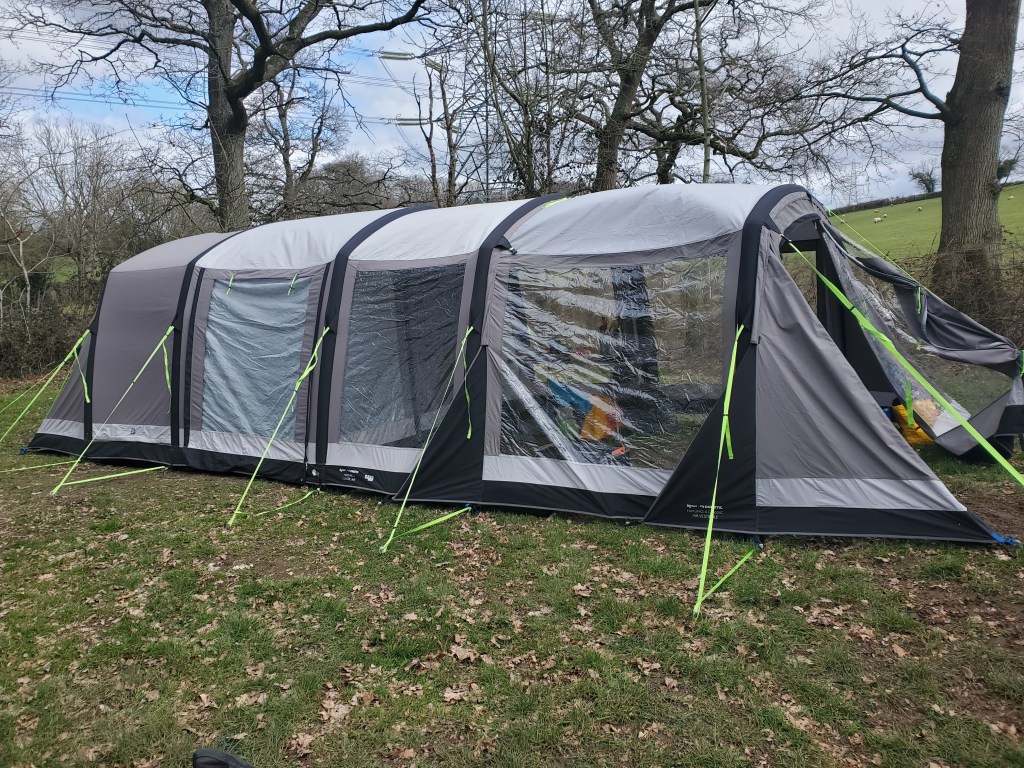
In the post about our recent camping trip, we promised to introduce you to Alice properly. Well here she is in all her beauty at Pit Hill campsite:

Some of you might actually remember her arrival. She is a Kampa Hayling 4 Classic in polycotton. For a large tent, she is pretty easy to put up as she is inflatable and we have an electric pump and battery pack, so we don’t even need to pump manually!

What’s with her name? Well, of all our tents she is by far the most luxurious. We found ourselves describing her as a palace – so when we were trying to think of a name for her we decided Alice the Palace had a nice ring to it!

We’ll look forward to introducing her more fully over the next few blog posts.

R & L

Hello from a field

Camping season has begun!!We are currently enjoying coffee & cake by a fire to take off the chill in the air.

The we managed to get the tent up before the rain, and it stopped to enable us to go for a walk & cook dinner on the fire last night. However everything is muddy! Good job we packed our wellies!!

It wasn’t too cold overnight…especially if you have double thermals on, carpets & down sleeping bags.

Last time we camped at Pit Hill we brought the spaceship & camped light using Betty’s boot as our kitchen. This time we brought Alice & camped in style!

More about who Alice is another time…

R & L

Tuna pasta

Even when I’m not camping I often use my camping recipes as they are super reliable – if you can cook it in a field, it ought to turn out ok in a domestic kitchen!

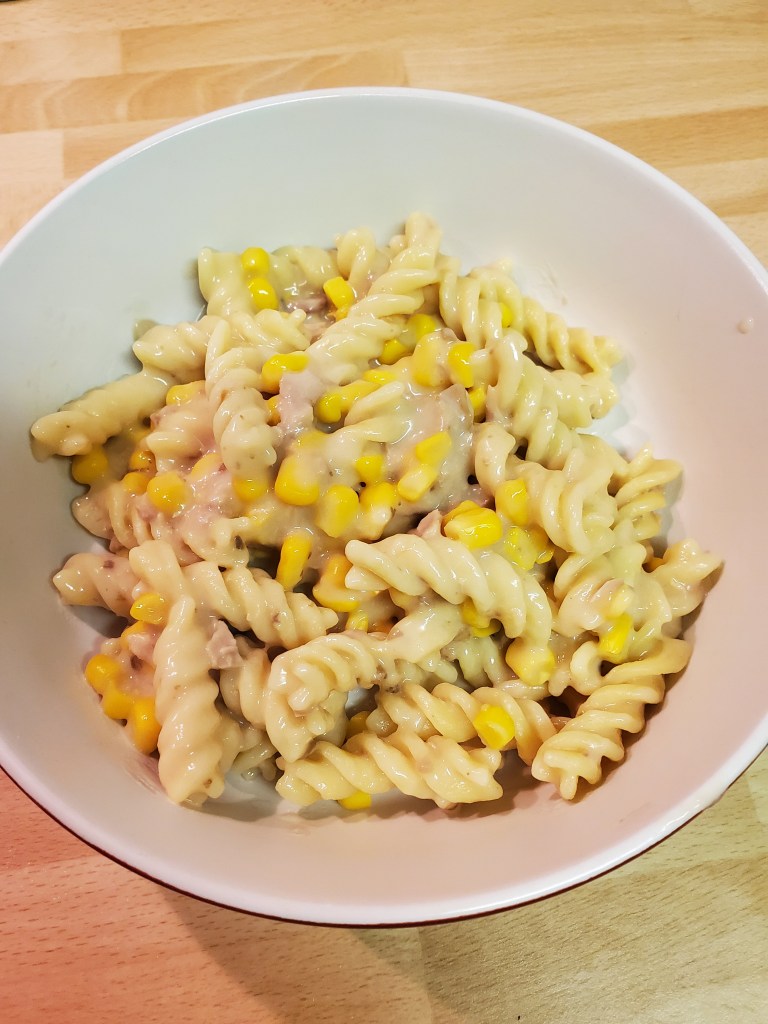
I also like to practise recipes that I think might make good additions to my caming recipe book. This week I discovered this very simple meal:

Tuna Pasta (serves 3)

3 cups pasta

1 tin mushroom soup (400g)

1 tin tuna (145g)

1 tin sweetcorn (200g)

Put pasta in pan with soup. Refill soup tin with water and also add this to pan.

Boil until pasta soft.

Stir in drained tuna and drained sweetcorn and warm through.

Super simple! This was the first time I’d tried it. Another time I might experiment with adding a tin of sliced mushrooms too as it might add a nice variety of textures.

If you’d like to read about our camping food suggestions, check out this section of the website Campsite Cooking.

L

Look what we found!

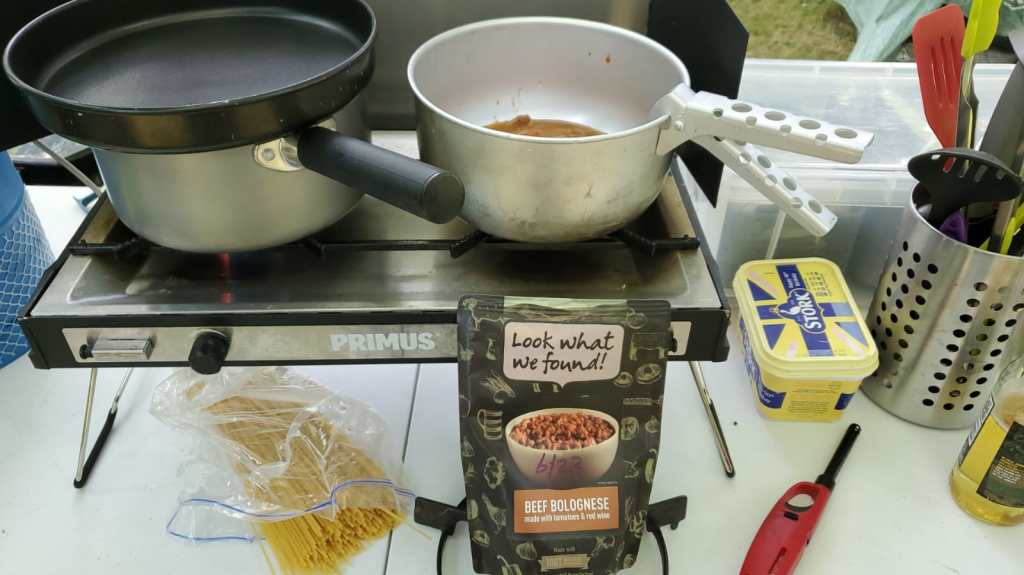
Look what we found… a nice shady spot to camp in a heatwave! We had a lovely couple of nights at Pit Hill Farm – the campsite we stumbled across when walking the Wayfarers walk in Hampshire.

We kept things simple this time. We had a new simpler camp set up to try out (more about that next time!). We also tried out some new easy camping food called ‘Look what we found”!! Very easy to use and tastey too!

Very pleased with both our finds!

R & L

The glint of a teardrop!

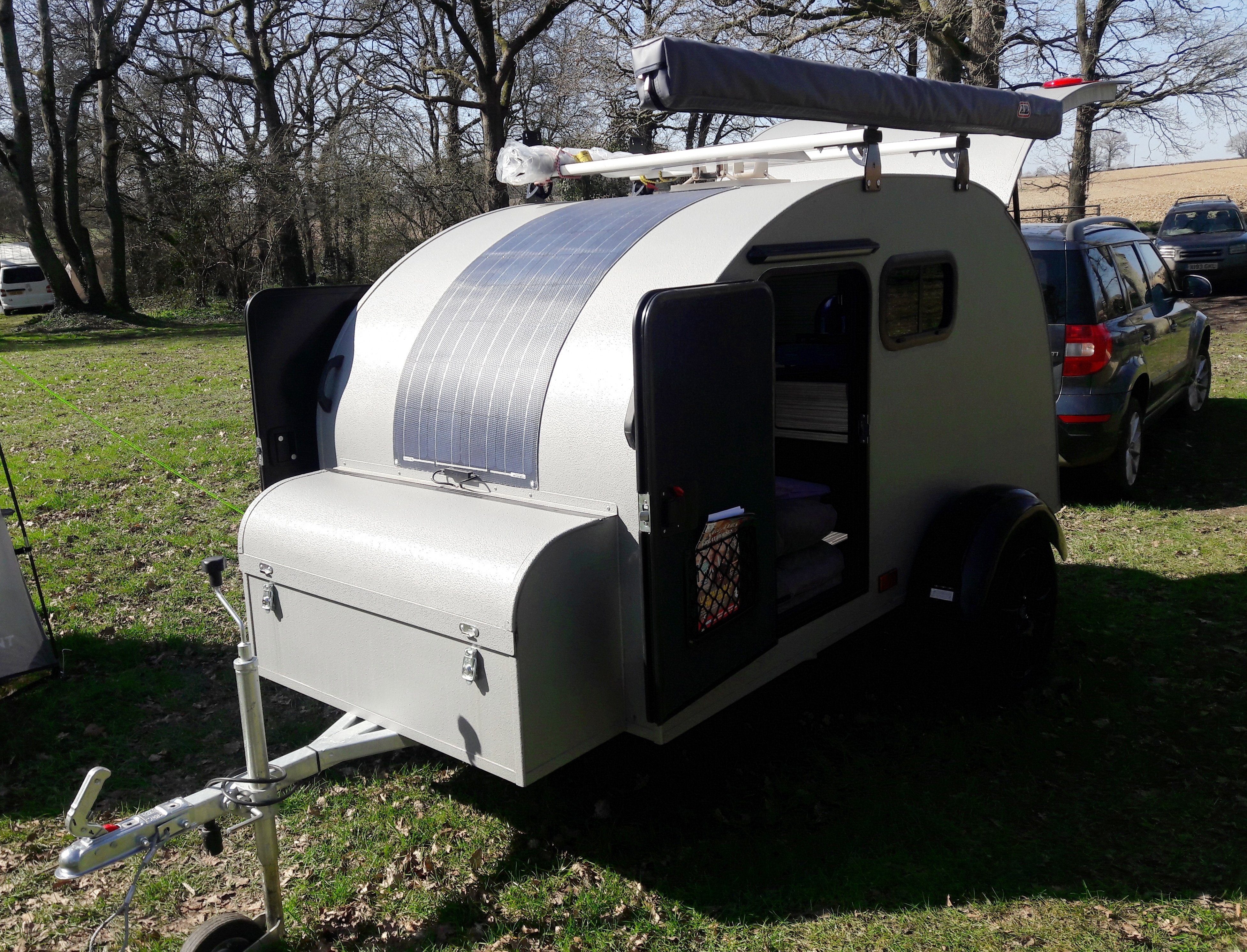
In our last post we mentioned seeing the glint of the tops of campervans at Pit Hill Farm and going to explore. Not only did we find campsite but a friendly farmer who invited us to come and try out the site sometime.

We also found a friendly camper and proud owner of a beautiful new teardrop camper. I’d never seen anything quite like it, so I had to take some photos for you.

So compact and yet everything you need! And stylish with it.

We everso nearly went camping at Pit Hill recently, but a bout of COVID put a rain check on the plans. Hopefully we’ll try it out soon and of course we’ll let you know how we get on.

L

Netting a nettle

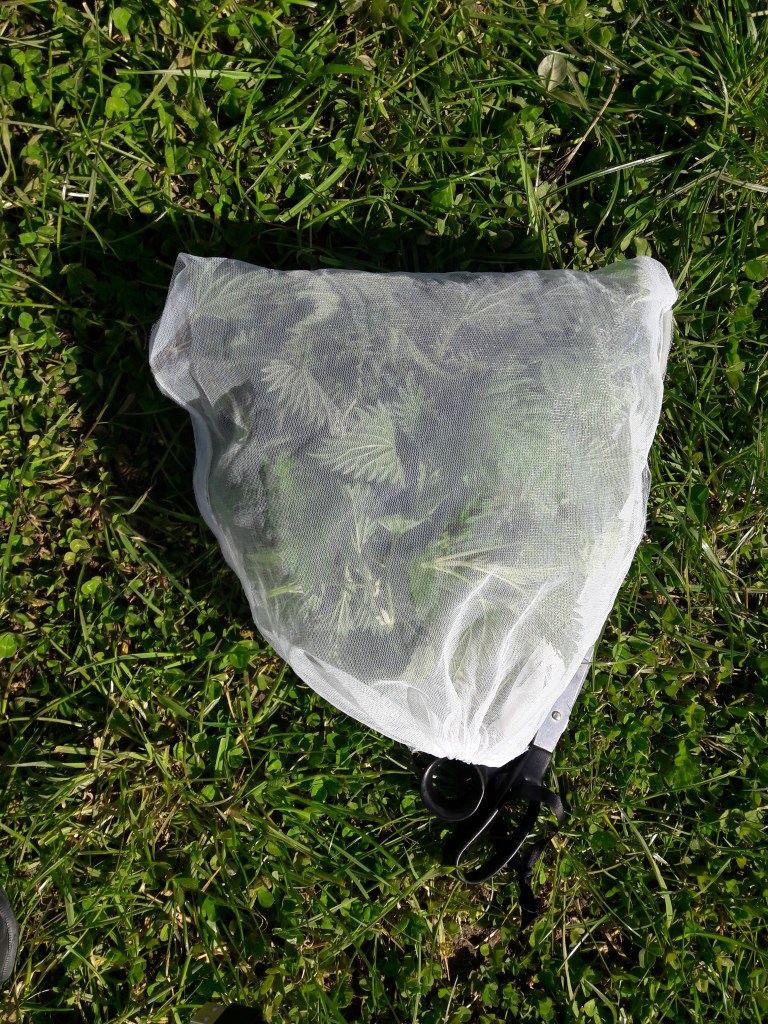
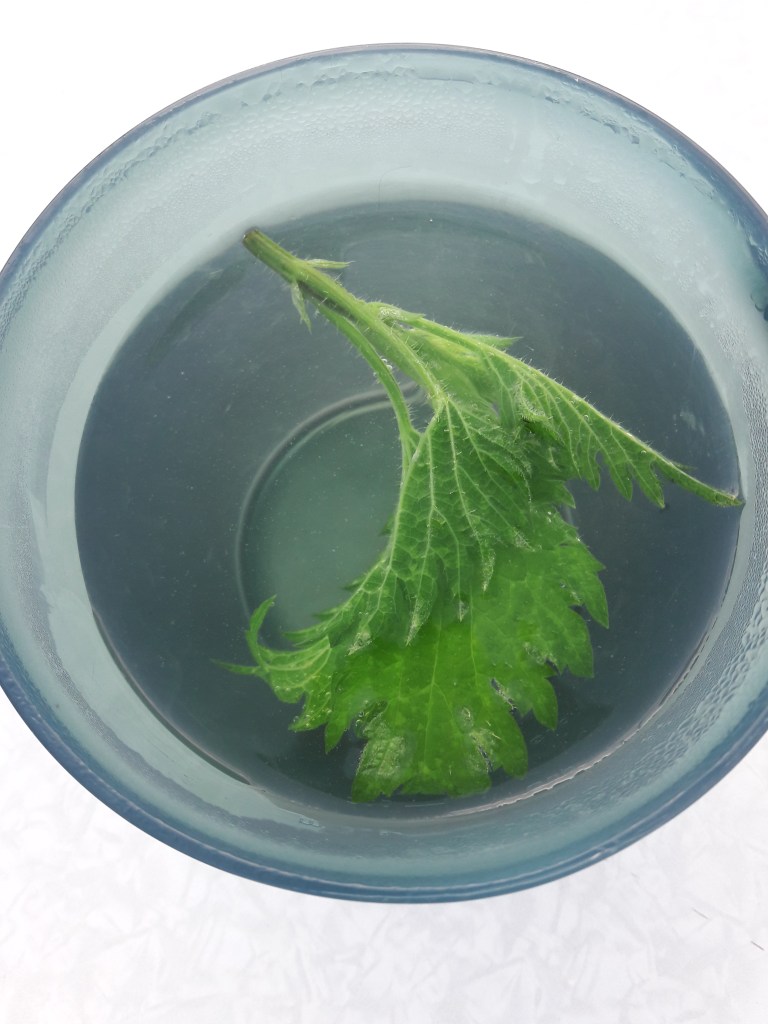
When you are camping it can be fun to supplement your menu with a spot of foraging. Stinging nettles are good to forage for as they are easily recognisable… if not so easy to pick! I collect them with scissors (even the small ones on my swiss army knife will do the trick) and I snip them straight into a bag. A net bag is ideal – the sort that they now sell in some supermarket to discourage you from using plastic. The bag is lightweight and compact, closes to stop the leaves escaping and you can just hang it up when you get home and also use it to to dry the leaves. Just don’t cram it too full so that the air can circulate well to dry the leaves.

It’s best to harvest the young nettle leaves as they are more tender, and obviously you want to avoid the ones with caterpillars or other insects. Take them from the top of the plant, you don’t want the tough stalk or old leaves.

Freshly picked nettle leaves make excellent nettle tea, which is supposedly very good for you. If you look online it would seem there wasn’t anything that nettle couldn’t cure! I’m not sure about all those claims, but there seems consensus that they are rich in vitamins and minerals and are good for reducing inflammation.

Don’t worry – steeping in boiling water or cooking the nettles gets rid of the sting!

You can also use them in place of spinach in cooking – below is a picture of a tasty breakfast we made frying up bacon and mushrooms adding nettles.

Happy foraging!

L

Pitching in the wind

When we arrived at Stockbridge View recently, not only was the weather cold, it was very windy. We thought it might be helpful to share our tips for pitching in the wind:

  • choose your location well. We are actually notoriously bad at this, we always want to pitch for the best view – usually the windiest spot on the top of the hill. We are slowly learning that sometimes it is wiser to forego the view and pitch in the shelter of a hedge or wall.
  • consider your angle. You probably want to try to pitch streamlined, especially if your tent is long and thin. Put the lower bits of the tent into the wind to guide the air over the tent rather than to buffet it. You don’t want to put your door into the wind – if you do the wind will come in when you open the door and lift your tent up like a kite. Pitching with your back to the wind also means that you can sit in your tent doorway and enjoy the shelter of your tent.
  • where will the fire go? Fires are an essential part of the camping experience, but in the wind you have to be a bit careful. Firstly you need to think about which way the wind will blow the flames. A gust can make the flames lick out quite far. You need to be a safe distance from your tent which is highly flammable! Of course the wind can also make lighting the fire difficult, so locating the firepit down wind of the tent, might make it easier to light as well as making sure the flames blow away from the tent. Bizarrely as well as being hard to light fires in the wind, it is also hard to get them properly out. A strong wind during the night can relight embers that looked like they were dying. In windy conditions knocking a fire out isn’t enough, always add water too.
  • make full use of guys. Sometimes it’s tempting not to use all the peg holes and guy ropes, but in the wind you really need to. Your tent was probably designed to withstand a bit of wind, but they were assuming you put it up as per the instructions! Guy ropes should be pegged out and then tightened. On normal tents, tighten as much as you can. On inflatable tents, it’s possible to overtighten and bend the poles out of shape – moderately tight should be fine.
  • pick good pegs. Our favourites for the wind are delta pegs . We put a few on the key guy ropes of each tent. If you are using normal metal pegs, angle them into the ground – if they form a continuation of the line of your guy rope, they are the wrong way round, they need to be pointing in towards your tent and roughly forming a 90 degree angle with your guy rope. Especially if the ground is soft try to get the pegs all the way in. If you can get the hook bit down onto the ground it will help stop it spinning round and the guy rope breaking free. There are also various v-shaped pegs available which stop the pegs from doing this. A mallet is an essential tool for getting a tent up firmly. A peg-puller might also be needed to get it down again!
  • weight your tent down. You can also help your tents stability by thinking where you put your heavier items inside the tent. If the wind is tending to get under a particular corner, maybe that’s the location for your suitcase or coolbox or whatever other weighty items you have.
  • know your limits. If your camp arrangement becomes unsafe, be sensible about when you need to put the fire out or retreat to your car.

Hope you have a safe camp trip & don’t get blown away.

R & L