Tips for keeping cool camping

Camping is a nice thing to do in a heat wave, but it can need some careful planning to keep your food and drinks cool all weekend. Here are some tips:

  • pre-cooling. Use your fridge at home to thoroughly chill your drinks so that they really cold before putting them in your cool box
  • separate bar box. You need to keep drinking to stay hydrated, but every time you open your cool box some coldness gets out and some warmth gets in. Have two cool boxes – one for drinks and other items you want to access regularly and another for food which you are trying to keep cold for as long as possible.
  • ice bucket. In addition to putting frozen ice packs in your cool box, add a bag of party ice. It will melt to become cool water, but unlike air it won’t escape every time you open the box
  • frozen towel. Cover your ice box with a damp towel which has been frozen. This will melt and slowly dry out, but the evaporation will help keep it cool and it’s another layer of insulation too.
  • reflect the heat. I haven’t tried this one, but covering your cool box in something reflective will help keep the heat out
  • bring frozen supplies. Keeping food safe is very important – no one wants a tummy upset on a campsite!! Plan your menu and for the dishes you are having later in your trip freeze the meat. Cutting up the meat first can be a good idea, as if your cooling has worked well it may still be frozen when you come to cook it! Small bits will defrost quickly. Cooking large pieces from frozen runs the risk of the middle not cooking properly, but tiny pieces will defrost as they hit the pan and cook through safely.
  • bring frozen drinks. You could take with you some bottles of frozen water, which will initially act like ice packs, but can also be enjoyed as a cool drink. Remember water expands when it freezes so don’t fully fill the water bottles.

Hope these tips help you have an enjoyable camping trip in the hot sunny weather this summer.

R
Martin’s cheesy balls

Last time we went camping together we were fortunate to manage to pick a dry, sunny weekend – although the nights were a little chilly reminding us it was autumn.

We revisited a favourite campsite – Hale Farm. We hadn’t been for a few years, partly as we have to drive past some of our other favourites to get there, and party because it is often fully booked! The facilities had been improved since we last stayed, so we updated our review.

There are good footpaths for walking straight from the campsite. We had hoped to call in at the nearby cafe & village shop on the way home, but for some reason it shuts early on a Saturday!

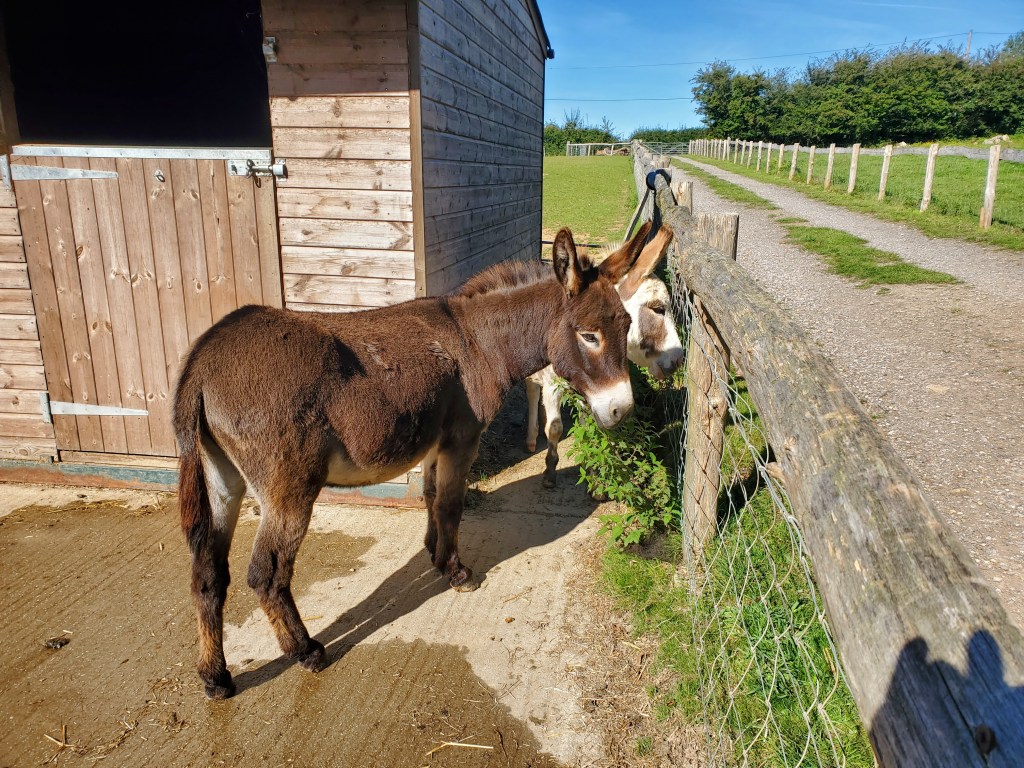
It’s a great site for taking children as the farm is open each morning to visit the animals. There is something therapautic about stroking a friendly donkey! The farmer also sells lamb burgers, sausages and eggs – we purchased some burgers, but they are still in the freezer so we can’t give you a proper review of those yet!

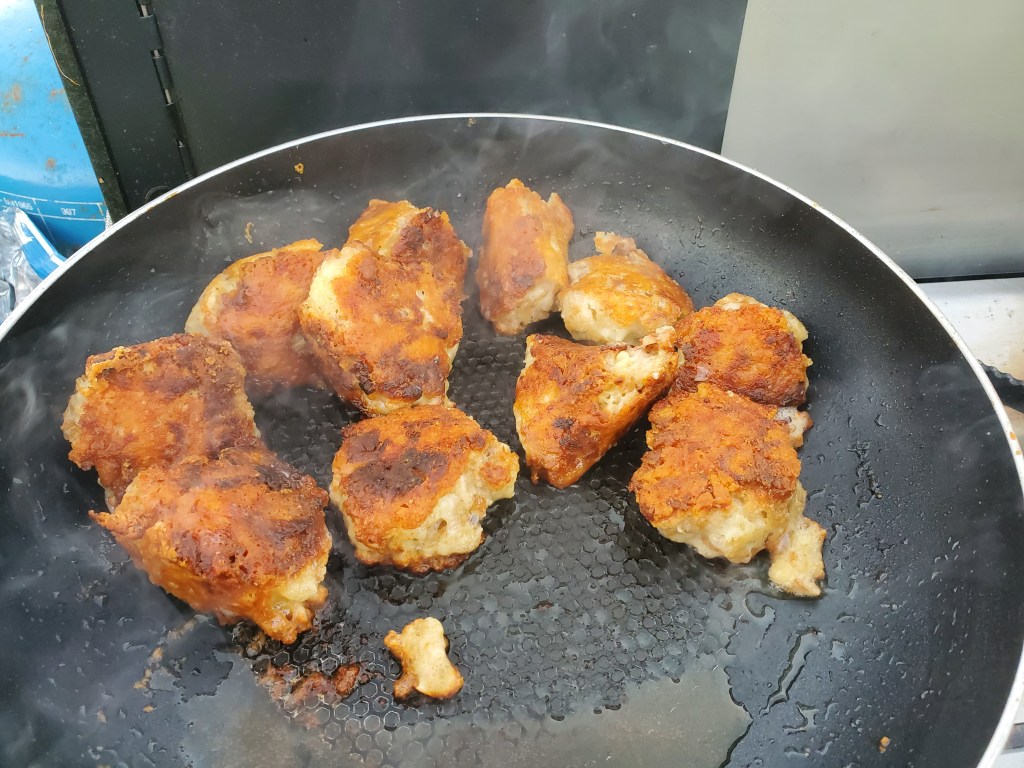
What we can review are Martin’s cheesy balls!! You might remember this was a recipe picked up from a fellow camper Martin whilst on a road trip. Well, we’re pleased to report that they turned out to be very tasty! They worked well as a starter while we waited for our main of pulled lamb to slowly cook on the fire.

Here’s the recipe:

Martin’s cheesy balls

Ingredients:

Torn bread, egg, grated cheese, finely chopped garlic

Method:

Mix everything together and leave to soak. Shape into golf balls and fry in oil.

They will be crispy on the outside but soft and squishy inside.

Enjoy!

L & R

Mystery revealed

It was a cube!!… with exciting attachments!!

Following Gary’s sad demise, a new gazebo was in order. This isn’t just any gazebo… but more of that to follow!!

We were grateful that it arrived in time for our latest camping trip as Monday was pretty rainy. We abandoned our plan to walk the fourth part of the pilgrims way (again more on that to follow) and instead hunkered down in the gazebo with mugs of coffee.

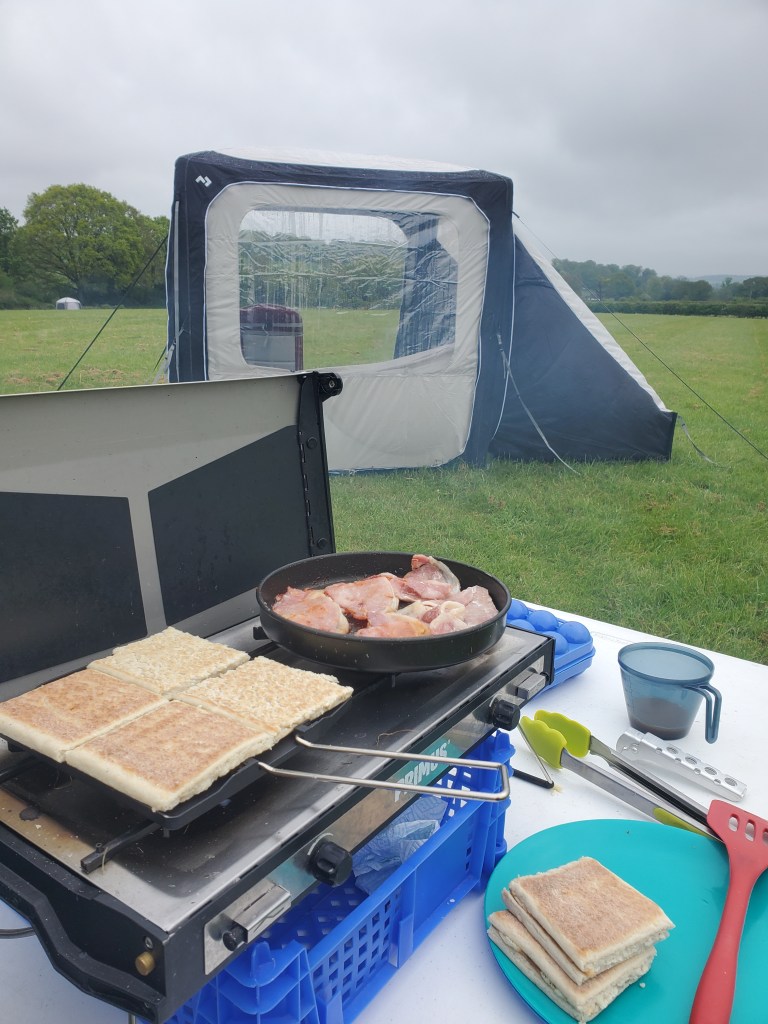
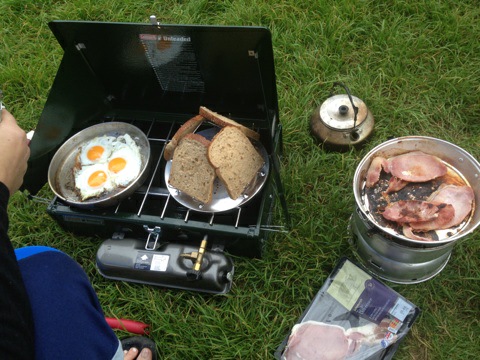
Fortunately it wasn’t rainy enough to prevent us cooking breakfast – this is our latest breakfast find, Irwin’s potato breads. Available in Sainsburys in packs of four, they are easy to warm up on the days when you haven’t the time to make potato cakes from scratch. It was pleasing to discover that 4 fitted perfectly on the griddle pan that cam with the primus stove. We had them with bacon and fried eggs – tasty way to start the day.

L & R

Happy Pancake Day!

I’ve made lots of things in a field…but oddly not normal pancakes. Banana pancakes, yes…but not the normal sort you have on pancake day.

I’m sorry to disappoint, but I’m not currently standing in a field in the dark cooking tonight’s treats…I’m not even in the garden, but I did take the opportunity to practise the quantities ready for my next outdoor culinary opportunity!

Camping Pancakes (serves 2)

Mix together:

2 dessertspoonfuls dried milk powder

4 heaped dessertspoonfuls plain flour

1 egg

2 cups water

Heat oil in a frying pan. Pour in some batter. When one side is golden brown flip & cook the other.

Serve with white sugar & lemon juice (from a bottle) or syrup or chocolate spread…or whatever you have to hand in your camp kitchen.

Remember you always need more oil & a hotter pan than you think you do!!

My batter was lumpy, but this made nice thick pancakes so I couldn’t tell once they were cooked!

Enjoy!

L

Look what we found!

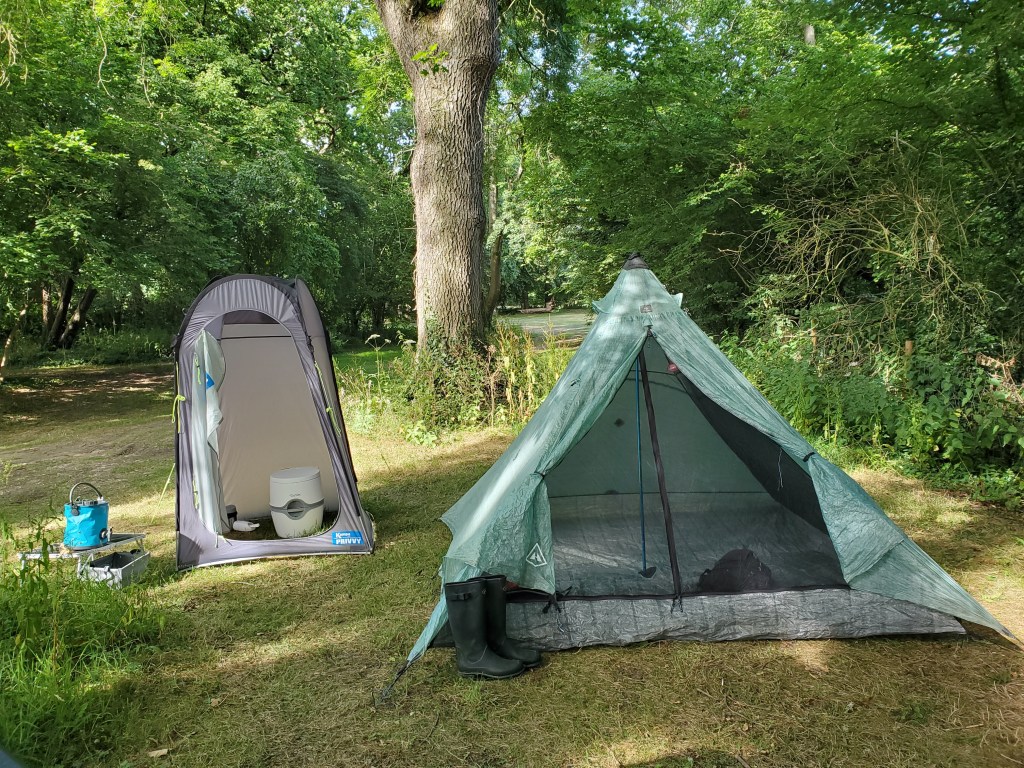
Look what we found… a nice shady spot to camp in a heatwave! We had a lovely couple of nights at Pit Hill Farm – the campsite we stumbled across when walking the Wayfarers walk in Hampshire.

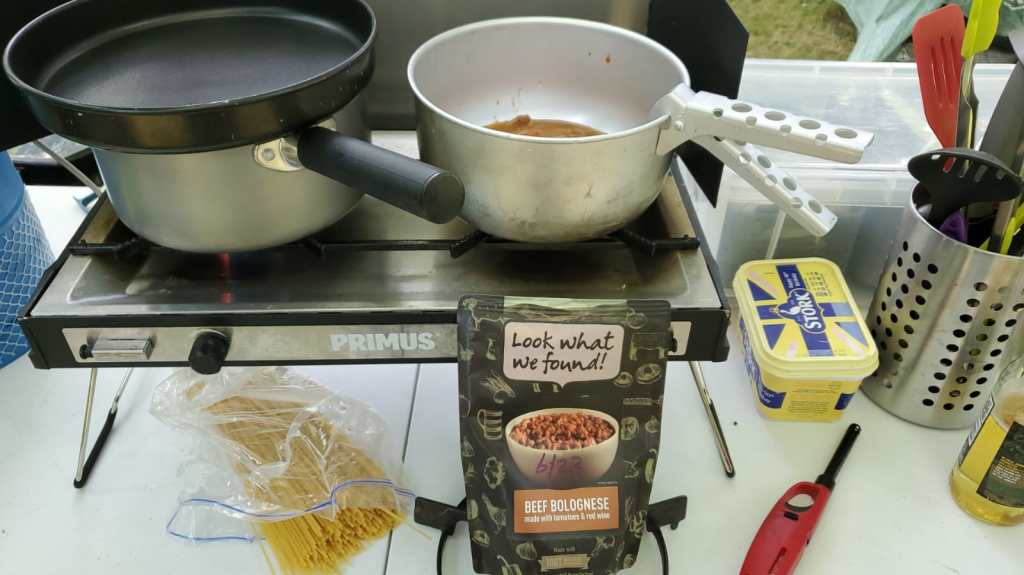
We kept things simple this time. We had a new simpler camp set up to try out (more about that next time!). We also tried out some new easy camping food called ‘Look what we found”!! Very easy to use and tastey too!

Very pleased with both our finds!

R & L

Netting a nettle

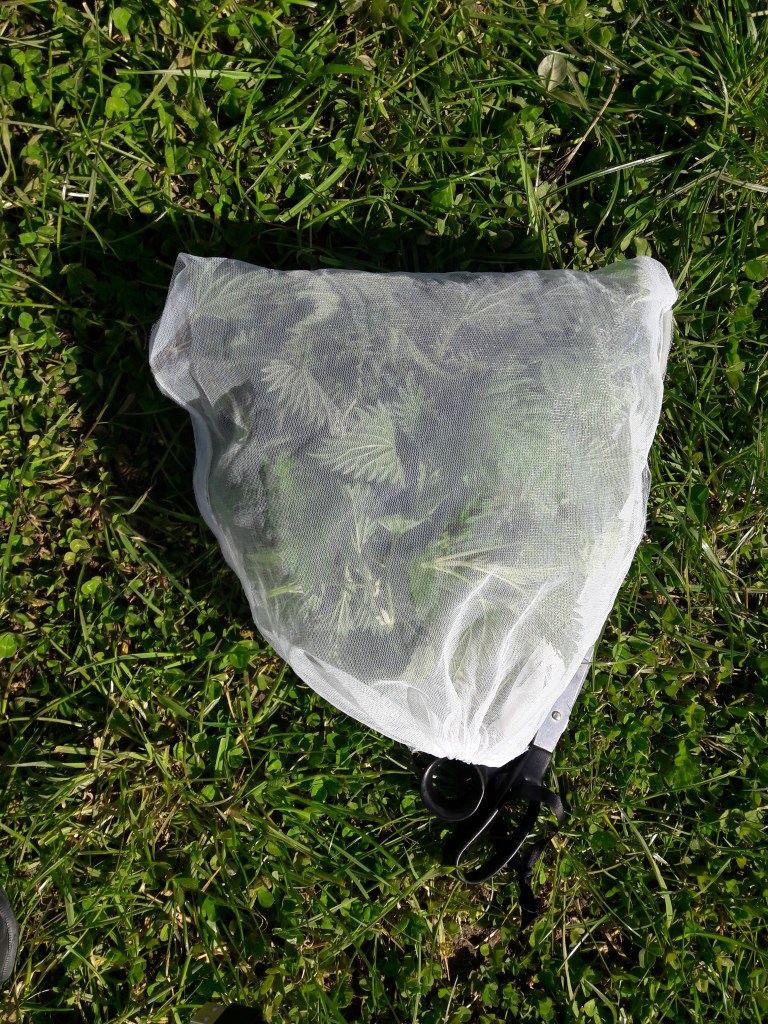
When you are camping it can be fun to supplement your menu with a spot of foraging. Stinging nettles are good to forage for as they are easily recognisable… if not so easy to pick! I collect them with scissors (even the small ones on my swiss army knife will do the trick) and I snip them straight into a bag. A net bag is ideal – the sort that they now sell in some supermarket to discourage you from using plastic. The bag is lightweight and compact, closes to stop the leaves escaping and you can just hang it up when you get home and also use it to to dry the leaves. Just don’t cram it too full so that the air can circulate well to dry the leaves.

It’s best to harvest the young nettle leaves as they are more tender, and obviously you want to avoid the ones with caterpillars or other insects. Take them from the top of the plant, you don’t want the tough stalk or old leaves.

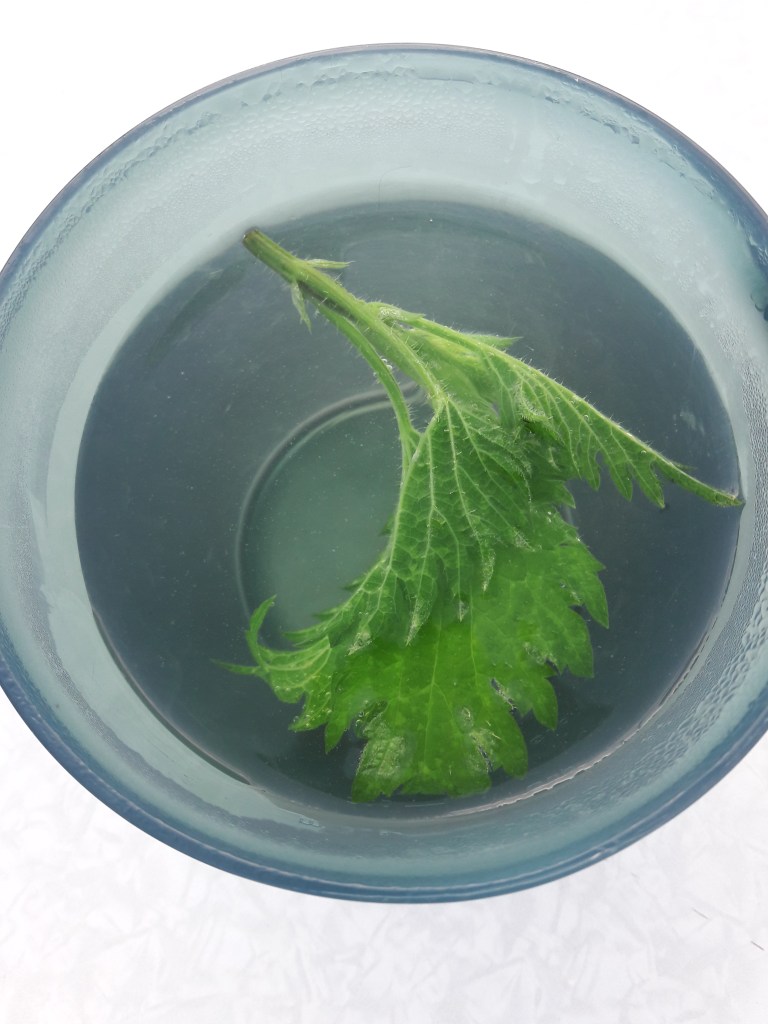
Freshly picked nettle leaves make excellent nettle tea, which is supposedly very good for you. If you look online it would seem there wasn’t anything that nettle couldn’t cure! I’m not sure about all those claims, but there seems consensus that they are rich in vitamins and minerals and are good for reducing inflammation.

Don’t worry – steeping in boiling water or cooking the nettles gets rid of the sting!

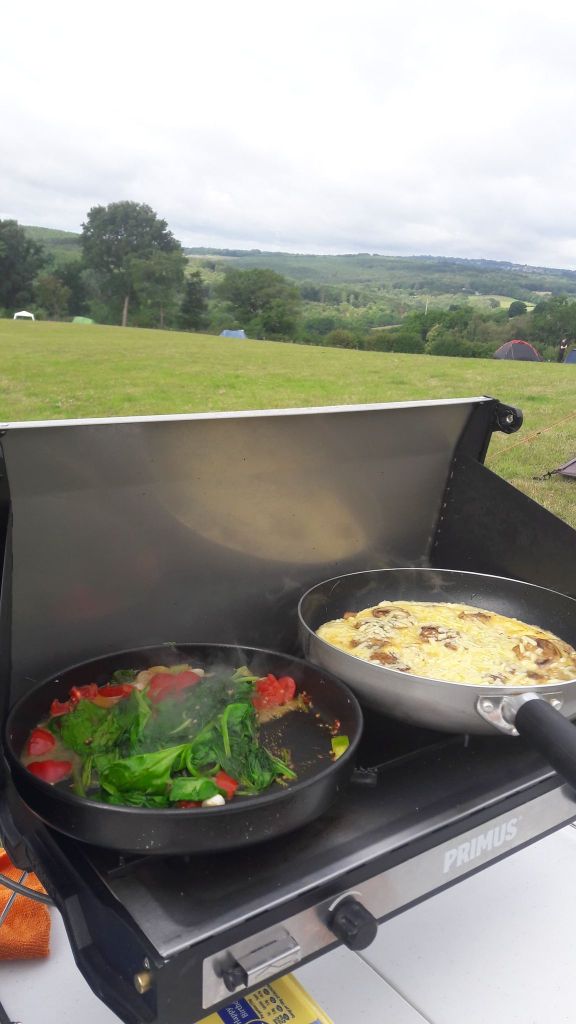
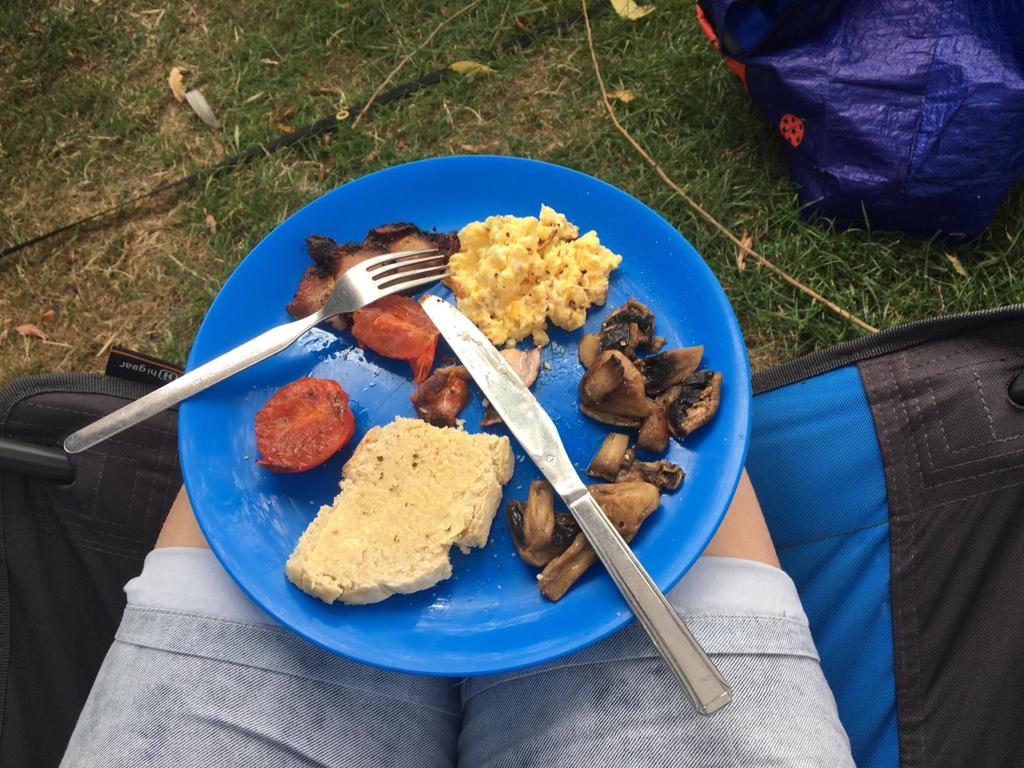
You can also use them in place of spinach in cooking – below is a picture of a tasty breakfast we made frying up bacon and mushrooms adding nettles.

Happy foraging!

L

Anticipating tasty camping trips ahead

I got a new cookery book for Christmas – and I’m hopeful it will provide inspiration for some good camping meals!

Long-life ingredients are ideal for camping when you have limited space in your cool box. I’ve already adapted some recipes from Jack’s earlier book (A girl called Jack) for previous trips. So I’m hopeful of some new inspiration for 2022’s camping trips!

As you can see, I purchased some tins to start trying it out straight away!! The first recipe I tried was tasty, but not ideal for campfire cooking as it was a pie!

L

The most important meal of the day #3

Sometimes we think it would be nice to have something lighter for breakfast … but it’s generally only a thought. We pretty much always end up having a cooked breakfast when we are camping – usually a fry up.

Sometimes we pack breakfast cereal. This is a good option if some of your camping party are the type who wake up hungry and can’t wait for the fire to get going and food to cook! The downside is that you need to store the milk for it. Long life milk could be an option, but we’ve a super cool box (which is just as well as one of the goats is a bit of a milk snob and likes fresh milk!!). Even so, milk is bulky.

Porridge is a good option, especially on chilly mornings. Even better it can be made very successfully with powdered milk, which is a versatile camping staple. I use a cup of rolled oats, 2 tablespoonfuls dried milk powder, 2 cups of water and a pinch of salt, boiled up on the stove to serve 2.

And of course porridge can be jazzed up in numerous ways – adding raisins is one of our favourites, or a sprinkling brown sugar on the top. Alpen museli also makes a good sprinkle topping. Or how about a swirl of cinnamon? Or stir through berries or chocolate chips? I like that ginger you get in syrup finely chopped and stirred through, but the other goat would not approve of that!

An alternative take on porridge is to make baked oats over the fire. This is oats (2 cups), sugar (3 tbsp), milk powder (3 tbp), baking powder (1 tsp) and a pinch of salt mixed up with an egg and some water (1 1/2 cups) and baked like a cake. Add some raisins and this also works well as a tasty snack for elevensies.

Being as you’re on holiday – how about treating yourself to pancakes?

Banana pancakes work well for breakfast: mash 2 bananas then stir in 4 heaped dessertspoonfuls of self-raising flour. Next stir in an egg, 2 dessertspoonfuls of sugar and 2 of milk powder. Thin the batter using 200 ml water and then cook spoonfuls in an oiled pan, turning to brown both sides. The end result looks like little scotch pancakes and taste delicious on their own as breakfast or with a little drizzle of maple syrup to make a dessert.

And who says you need to be camping to enjoy these breakfasts – I had banana pancakes this morning!

L

The most important meal of the day! #2

I hope the post about fried breakfasts whetted your appetite?

A fry up isn’t the only way to do a cooked breakfast when you’re camping – here are a few more cooked breakfast options…

1) Shakshuka

This is a good vegetarian option – eggs poached in a tomato sauce with spinach or kale.

2) Omlette

This one is a mushroom omlette with tomatoes and spinach as a side. Mushroom is my favourite omlette and mushrooms also transport well for camping. I think the trick for making a good omlette is to cook it in butter. I cook whatever’s going in the omlette first and then add more butter to the pan. When the butter’s all melted I add the eggs which I’ve already beaten with a splash of water & salt and pepper.

3) Breakfast stew

We’ve been refining this over our last few camping trips. Basically it’s a fry up in a pot!! This is our best attempt so far – chipolatas, chorizo & mushrooms fried, then add baked beans, barbecue sauce and tinned cherry tomatoes, get it boiling and poach some eggs in the sauce.

Sorry if you’re now feeling hungry!

L

The most important meal of the day! #1

I’m sure someone such as your mother or grandmother probably told you that breakfast is the most important meal of the day. Certainly breakfast is a very important part of camping!

So here are a few breakfast ideas to inspire you.

The classic fry-up

This is our default camping breakfast. We like other things… but often you can smell the bacon from your neighbours and inevitably you feel a bit jealous. We mix and match to keep things interesting – here are some of our favourite options:

sausages – chipolatas are the best as they cook quickly and are less likely to result in the burnt on the outside, raw in the inside phenomena!

bacon – cooked until it is nice and crispy, who can resist the smell of cooking bacon?

eggs – fried or scrambled. When I make scrambled eggs, for every egg I add a knob of butter, a splash of milk and my secret ingredient a knob of cheese!

mushrooms – a favourite of mine, roughly chopped and cooked in a pan with some butter. If you are doing a vegetarian breakfast you could also add a little finely chopped onion and some handfuls of spinach.

baked beans – not my favourite, but the other goat likes them. Fortunately you can buy half sized tins for exactly this eventuality!

tomatoes – cut in half and cooked briefly on both sides to mimic grilled tomatoes

bread – either bought, or if there’s plenty of time I often make damper bread in the dutch oven over the fire.

fried potatoes – always cut them into smaller cubes than you think is necessary to be sure they cook through

potato cakes – made with leftover potato from the night before or with instant mash, mixed with butter and flour and dry fried

griddle scones – good to rustle up out of stock ingredients (self-raising flour, egg, milk) and fried, my favourite varity have shredded cabbage in them too!

orange juice – I think this is an important accompaniment as the sharpness of the juice cuts through the fatty fry up. I get the longlife fruit juice when we’re camping as it makes storage easier.

a pot of tea – I don’t do anything before tea, let alone cook breakfast in a field!

More breakfast options to follow in the next post.

L

PS don’t forget to pack the ketchup! (I often do forget, much to the other goat’s disappointment!!)

Damper bread cooked in the Dutch Oven